

Historically, multi-site enterprises relied heavily on traditional Wide Area Network (WAN) technologies (such as dedicated leased lines, ATM, or MPLS) to interconnect branch offices with headquarters. These WAN lines provided massive bandwidth and ultra-low latency, but they came with steep monthly carrier costs.
As businesses shift internal workloads and infrastructure to cloud-hosted environments, the fundamental requirements of enterprise networking have changed—making Point-to-Point VPNs over standard broadband a far more cost-effective alternative.
1. The Shift to Cloud Infrastructure
In traditional IT environments, a company had to host all core infrastructure on-premises. For example, maintaining an organization’s email presence required dedicated physical servers, local exchange storage, and constant IT management.
Modern networking leverages three primary levels of cloud migration:
- On-Premises Infrastructure: High internal bandwidth required between sites to sync files, data centers, and local databases.
- Cloud Hosting (IaaS): Offloading physical server management to cloud providers while retaining control over application configuration.
- Software as a Service (SaaS): Eliminating internal server management entirely (e.g., using Google Workspace or Microsoft 365 for email), where the cloud vendor manages execution, uptime, and security end-to-end.
2. Why Point-to-Point (Site-to-Site) VPNs Make Sense
When core services move to the cloud, branch offices no longer need high-speed dedicated lines directly to headquarters—they simply need reliable internet access to reach cloud endpoints.
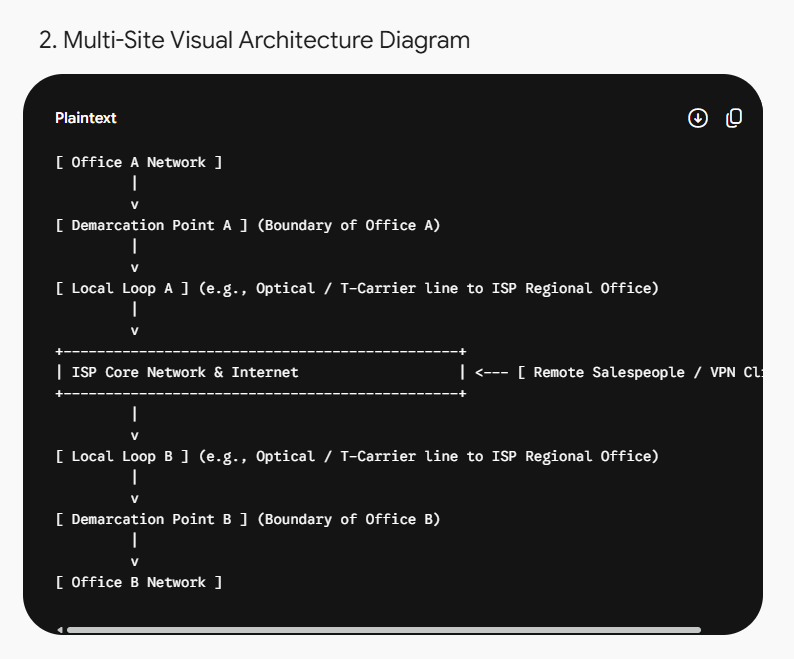
For communication between sites, organizations deploy Point-to-Point VPNs (also known as Site-to-Site VPNs):
- Hardware-Level Tunneling: Dedicated edge devices (routers or firewall appliances) automatically establish and encrypt the secure VPN tunnel between locations.
- Transparent to End Users: Individual devices do not need client software running. Traffic between Office A and Office B is encapsulated and routed seamlessly in the background.
- Cost Efficiency: Utilizes inexpensive commercial broadband, cable, or DSL connections rather than high-cost dedicated WAN leases.
Technical Comparison: Traditional WAN vs. Point-to-Point VPN
| Feature | Traditional Dedicated WAN | Point-to-Point (Site-to-Site) VPN |
| Primary Connection Medium | Dedicated leased fiber lines (MPLS / Circuit-switched) | Public Internet over Broadband, Fiber, or DSL |
| Deployment Cost | High recurring monthly telecom expenses | Low cost (utilizes existing internet connections) |
| Encapsulation & Security | Carrier-isolated paths (minimal encryption required) | End-to-end encrypted tunnels (IPsec / OpenVPN) |
| User Experience | Transparent (handled by network core) | Transparent (handled by site edge routers) |
| Best Suited For | High-throughput, latency-critical data center sync | Distributed offices accessing Cloud/SaaS applications |
Alt Text: Diagram comparing traditional high-cost WAN circuits with site-to-site VPN tunnels over broadband internet connecting to cloud infrastructure.

The image above this text is structured to compare two core network transport methods,
stacked vertically to remove clutter and improve clarity:
- Scenario 1: Traditional Dedicated WAN (ATM/MPLS): This shows a single, continuous, highly resilient data conveyor belt—representing a direct, low-latency, private path—connecting headquarters to a remote site.
- Scenario 2: Modern Cloud Architecture & Point-to-Point VPN: This visualizes multiple regional sites connecting individually over the Public Internet (labeled Broadband/DSL) and then merging their secure data flows into a central, encrypted Point-to-Point VPN Tunnel to reach the Cloud Services Hub.


Geef een reactie