
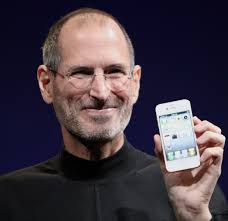
Would Steve Jobs Have Supported Data Harvesting?
A look at Steve Jobs’ philosophy on privacy, user consent, and the business models behind modern tech.As debates about digital privacy intensify, one question keeps coming back:
Would Steve Jobs have supported the kind of large-scale data harvesting that defines much of today’s tech industry?
Introduction
As debates about digital privacy intensify, one question resurfaces again and again: would Steve Jobs have supported the kind of large-scale data harvesting that defines much of today’s tech industry?
Apple has positioned itself as the privacy-centric alternative to data-driven giants like Google and Meta. Many people wonder whether this stance reflects Jobs’ original vision, or whether Apple’s modern privacy branding is mostly a post-Jobs evolution.
A close look at Jobs’ public statements, product decisions, and business philosophy reveals a surprisingly consistent answer.
Steve Jobs’ Core Belief: Privacy Is About Control
Jobs’ most famous statement on privacy came during the 2010 AllThingsD conference, where he said:
This wasn’t a throwaway line. It was a clear articulation of a principle:
Users should always understand what data is collected, why it is collected, and should have the power to say no.
That philosophy stands in sharp contrast to the “collect first, explain later” approach that many tech companies adopted throughout the 2010s.
A Business Model That Didn’t Depend on Data
Jobs understood something fundamental:
Privacy is not just a technical choice. It is a business model choice.
Apple under Jobs made money by selling hardware, software, and carefully designed user experiences. It did not depend on selling user data or building its empire around targeted advertising.
That gave Apple the freedom to minimize data collection without destroying its revenue model.
In contrast, companies like Google and Meta built enormous businesses around behavioral data. Their advertising models require large amounts of user information to fuel targeting, prediction, and personalization.
Jobs saw this divergence clearly. He criticized the direction of ad-driven tech and understood that companies relying heavily on advertising would always feel pressure to push the boundaries of privacy.
Product Decisions That Prioritized User Protection
Jobs’ privacy philosophy wasn’t just talk. It shaped Apple’s products in concrete ways.
- On-device processing long before it became a major marketing point.
- Strict App Store rules designed to limit third-party data abuse.
- Permission prompts for location access and notifications.
- A closed ecosystem that reduced external tracking.
- Early adoption of encryption across devices and services.
These decisions created the foundation for Apple’s modern privacy features, including App Tracking Transparency, privacy labels, and more on-device machine learning.
Of course, Apple’s current privacy systems became much more advanced after Jobs’ death. But the cultural direction was already there.
Privacy as a Safety Issue
Jobs also understood the real-world risks of data misuse.
He warned about the dangers of location tracking and the possibility that people could be harmed if companies collected sensitive data without restraint.
This was not abstract philosophy. It was a recognition that digital privacy has physical consequences.
When a company collects location data, contact data, behavioral data, search history, health signals, or social patterns, it is not just collecting numbers. It is collecting pieces of someone’s life.
Would Jobs Have Supported Today’s Data Harvesting?
Based on his words and actions, the answer is clear:
No — Steve Jobs would not have supported large-scale data harvesting.
He believed in:
- User consent
- Transparency
- Minimal data collection
- Clear explanations
- Business models that do not depend on surveillance
Jobs believed companies should ask permission, not assume it. He believed people should understand what they were signing up for. And he believed technology should feel empowering, not invasive.
The Irony: Apple Became the Privacy Company
Jobs did not live to see the full explosion of data-driven advertising, surveillance capitalism, and the modern backlash against Big Tech.
He did not see the full rise of smartphones as tracking devices, social platforms as behavioral prediction machines, or apps that ask for far more data than they need.
But Apple’s modern privacy stance — from anti-tracking features to end-to-end encryption — is arguably the most faithful extension of his philosophy.
In a world where data is treated like oil, Apple is the rare tech giant that built its empire on something else.
Why Jobs’ View Still Matters
The modern internet often treats privacy as something users should trade away for convenience.
A free app. A smoother recommendation feed. A more personalized ad. A faster login. A smarter assistant.
But Jobs’ philosophy suggests a different standard:
Technology should earn trust before it takes data.
That idea feels even more important today than it did in 2010.
As artificial intelligence, advertising platforms, social media, smart devices, and cloud services collect more information than ever, the question is not only what companies can collect.
The real question is what they should collect.
Conclusion
Steve Jobs was not perfect, but he was remarkably consistent on privacy.
He believed users should be respected, informed, and empowered. He believed companies should ask permission, not assume it. And he believed technology should serve people, not exploit them.
If he were alive today, Jobs would almost certainly be one of the loudest voices criticizing the data-harvesting practices that dominate the modern internet.
Apple’s privacy stance is not just branding.
It is legacy.






Geef een reactie